Climate change is real. But why do some say it’s a hoax?
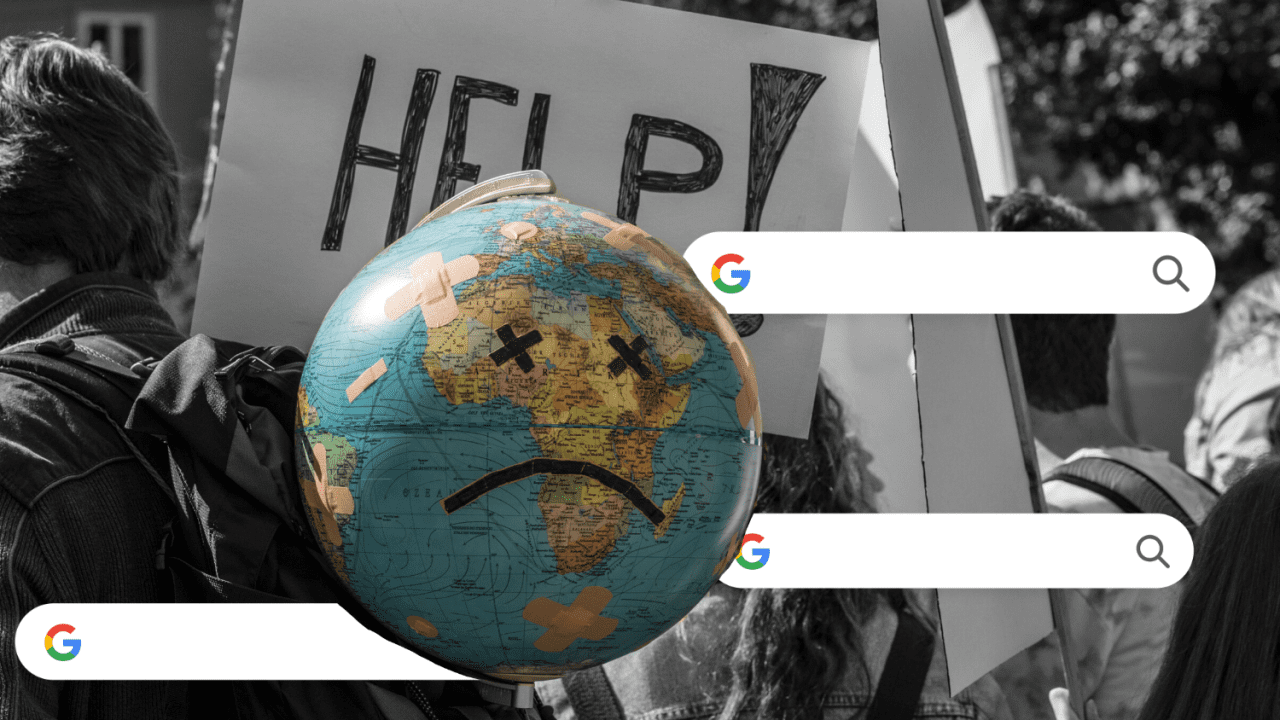
Climate change is one of the most pressing issues of our time, and it affects us all. Yet, unregulated social media and search engine companies have enabled a cascade of misinformation and disinformation to flood their platforms. The online spread of false and misleading claims about the climate crisis can erode trust in science, delay solutions, and risk lives.
In this blog, you will learn:
- What do climate scientists say?
- What is climate change misinformation?
- What is New Climate Denial?
- Climate denial, mis and disinformation, and tech platforms
- How can we tackle climate change mis and disinformation online?
What do climate scientists say?
97% of scientists agree that climate change is mainly driven by human activity. Our planet is warming at an ever-accelerating rate and leading to a catastrophic climate crisis.
We are at a climate tipping point. Delayed action means humanity will be forced to endure continual and worsening extreme weather events such as heatwaves, floods, droughts, typhoons and hurricanes. These events are coupled with rising sea levels and threats to our food supply. We’re already seeing it with events such as the 2025 Texas floods, LA wildfires, and extreme heatwaves across the UK and Europe, and with numerous others around the world.
Climate change is real. So why does our information ecosystem seem to be awash with people denying the science, obfuscating the truth, or proposing faulty explanations?
CCDH’s Toxic Ten report shows that some people and organizations continue to spread climate denial and disinformation about climate change because it’s profitable. For example, in the second half of 2021, just ten websites promoting climate disinformation earned $3.6 million in advertising revenue from Google. This undermines global efforts to address the crisis.
To make things worse, our report “The New Climate Denial” shows that climate deniers are coming up with new strategies to bypass social media and search engine platforms’ content moderation efforts – and these companies are failing to keep up with climate disinformation.
Calling the climate crisis a “climate hoax” or attacking the climate movement, science and solutions won’t make it go away, and all of us will continue to live with the consequences of climate change.
What is climate change misinformation?
CCDH is a member of the Climate Action Against Disinformation (CAAD) coalition.
We define climate disinformation and misinformation as deceptive or misleading content that:
- Undermines the existence or impacts of climate change, the unequivocal human influence on climate change, and the need for corresponding urgent action in line with the IPCC and Paris Agreement;
- Misrepresents scientific data, including by omission or cherry-picking, to erode trust in climate science, climate-focused institutions, experts, and solutions;
- Falsely promotes efforts as supportive of climate goals that in fact contribute to climate warming or contravene the scientific consensus on mitigation or adaptation.
There’s a difference between misinformation and disinformation: misinformation is false content shared unknowingly, while disinformation is false content shared intentionally.
Whatever its form, climate misinformation and disinformation can be incredibly harmful because it can delay or even prevent meaningful action to mitigate the effects of the climate crisis.
What is New Climate Denial?
As climate impacts become more visible, deniers are shifting strategy. In January 2024, CCDH showed that, instead of spreading outright climate denial, deniers are shifting tactics to attack the climate movement, science, and solutions.
CCDH’s analysis of 4,458 hours of YouTube content found that by 2023, 70% of climate denial content fell under this ‘New Climate Denial’ — up from 35% in 2018.
The New Climate Denial narratives we identified on YouTube move away from the claim that “global warming is not happening” towards claims saying that:
- The impacts of global warming are beneficial or harmless.
- Climate solutions like renewable energy won’t work.
- Climate policies are ineffective.
- Climate science is unreliable.
- The climate movement is unreliable, alarmist or corrupt.
These narratives can be more subtle and often fall through the cracks of ineffective content moderation – but they’re just as harmful because they erode trust in science and in the climate movement, delaying the solutions we desperately need to save the planet.
Climate denial, mis and disinformation, and tech platforms
Social media platforms continue to fail on climate denial, misinformation, and disinformation.
In July 2025, CCDH found that X, Meta, and YouTube are allowing false claims about extreme weather events – including the LA wildfires and Hurricanes Helene and Milton – to spread without fact-checks or Community Notes.
These platforms are giving ‘verified’ status to users pushing these falsehoods, allowing their content to reach more people. YouTube is even profiting from these lies by placing ads next to them.
A particularly worrying finding is that conspiracy theorist Alex Jones’ false claims about the LA wildfires on X amassed more views than the combined views of posts from 10 major news outlets and 10 key emergency agencies. His posts included lies about emergency responders confiscating food; and the wildfires being part of a globalist plot to deindustrialize America.
In 2021, CCDH identified the Toxic Ten, a group of fringe publishers disproportionately responsible for spreading climate denial content. The research showed how the Toxic Ten fueled 69% of digital climate change denial, and altogether they have around 186 million followers on mainstream social media platforms.
Both Facebook and Google have failed to stop the spread of climate disinformation. CCDH revealed that Facebook failed to label 92% of Toxic Ten posts, and Google generated an estimated $5.3 million in ad revenue from their content.
Later on, in November 2022, CCDH revealed that Google was still making money at the expense of our planet. Our Greenwashing on Google report revealed Google Google’s role in allowing big polluters to target ads at users searching for “eco-friendly companies”.
The report showed that nearly half of the $23.7 million that Big Oil spent on Google Search ads in the last two years was used to target users searching for information about environmental sustainability. It means that fossil fuel companies like ExxonMobil, British Petroleum (BP), Chevron, Shell, and Aramco were able to distort search results about climate change.
Google had even broken its own promises not to profit from climate denial content by allowing ads that made false claims like “fossil fuels make the planet safer”. To learn more about the difference between climate disinformation and greenwashing, read our explainer.
How can we tackle climate change misinformation and disinformation online?
CCDH is working to expose how social media and search platforms – many of which claim to be green – enable and profit from climate disinformation.
On one hand, social media and search engine companies must update and enforce their climate policies to stop the spread of climate disinformation. On the other, Governments and lawmakers must create and enforce legislation to hold these companies accountable.
If we can make sure that spreading climate disinformation is not profitable, prevent the amplification of disinformation in ads and news feeds, and ensure that disinformation is labeled properly, we can begin to change things.
The stakes are high. Climate change is real. Misinformation is a serious problem that requires urgent action. Agree? Take action today: